
Know the signs:
hail & wind damage
A plain-language guide to what storm damage looks like, why it matters, and what to do after a storm passes through the greater Pittsburgh area.
What hail damage looks like
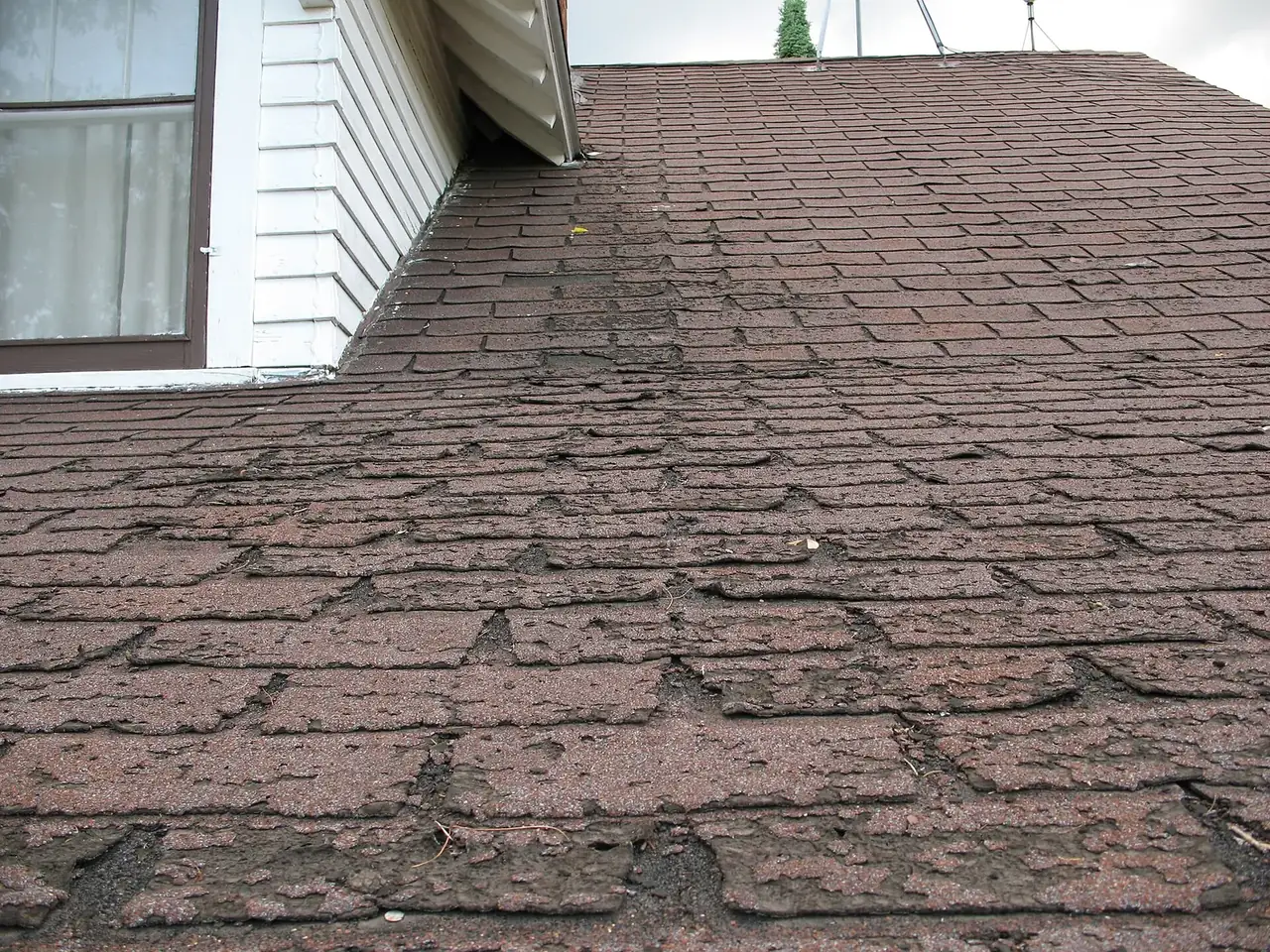
Hail hits a roof at random, so damage usually shows up as scattered marks rather than a neat pattern. On asphalt shingles, look for:
- Bruises or soft spots: random dark spots where the shingle was struck. They can feel soft, like a bruise on an apple.
- Granule loss: the gritty surface knocked off in spots, exposing black asphalt underneath.
- Exposed mat: on harder hits, the fiberglass mat inside the shingle can show through.
- Cracked or broken shingles: especially on older, more brittle roofs.
- Dents on metal: gutters, downspouts, roof vents, flashing, and siding often show dents. They're easy to see from the ground and a good clue the roof was hit too.
- Granules in gutters: a lot of shingle grit in gutters or washed out at downspouts after a storm.



What wind damage looks like
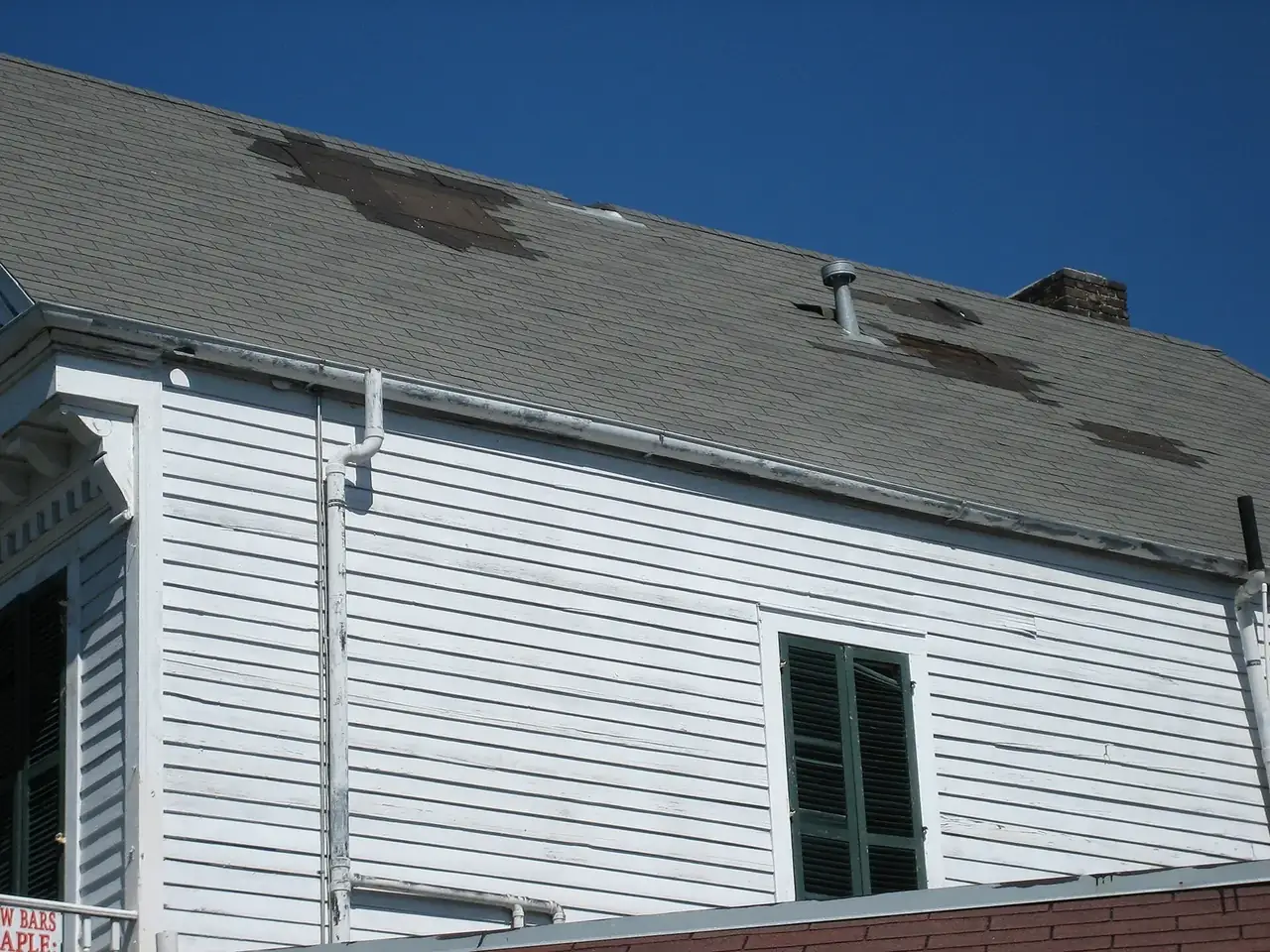
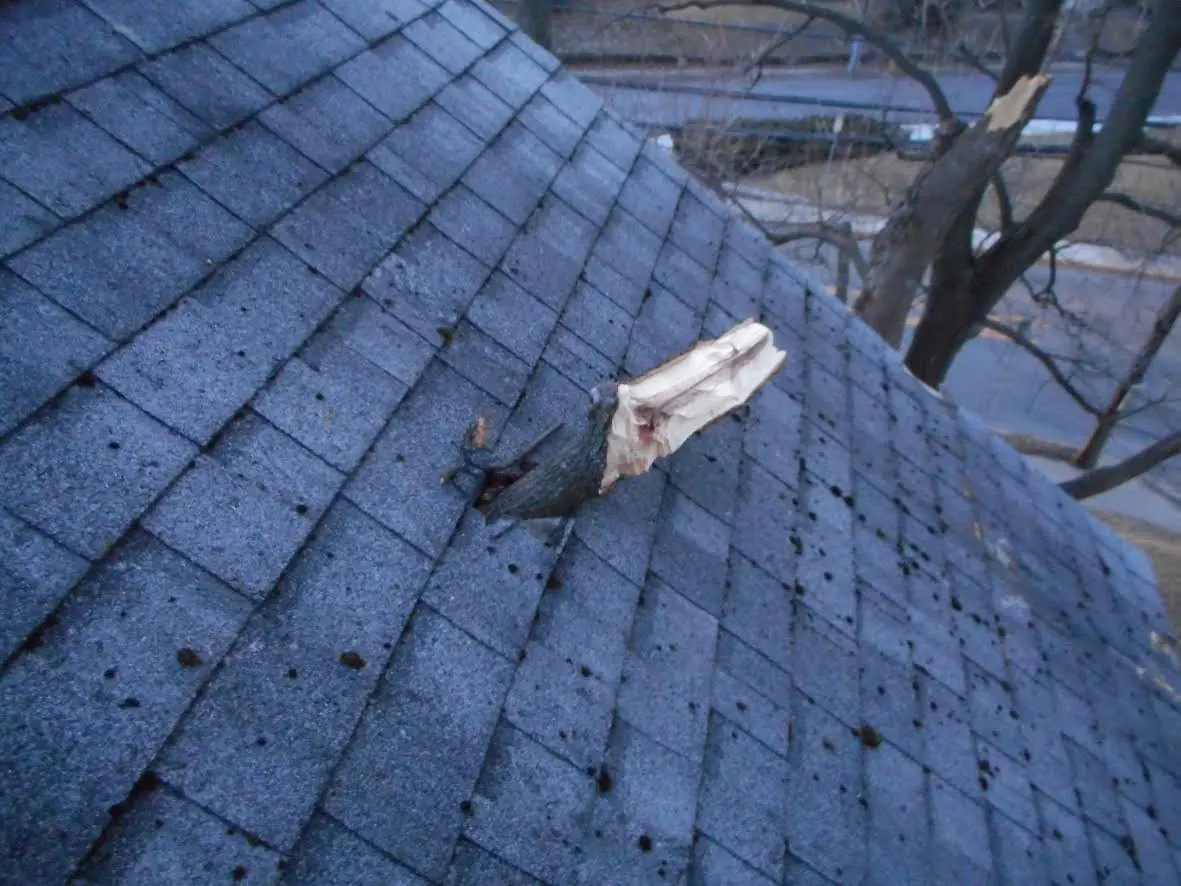
Strong gusts can get under shingle edges and break the seal that holds them down. Look for:
- Lifted or creased shingles: a shingle that flapped in the wind often has a horizontal crease where it bent.
- Missing shingles or tabs: bare spots on the roof or shingle pieces in the yard.
- Exposed nail heads: where shingles were pulled loose or blown off.
- Damaged ridge caps: the shingles along the peak are exposed to the most wind.
- Debris impact: dents, cracks, or punctures from branches and flying debris.
- Lifted flashing: loose metal around chimneys, skylights, and walls.



How big was the hail?
Weather reports describe hail by comparing it to common objects.
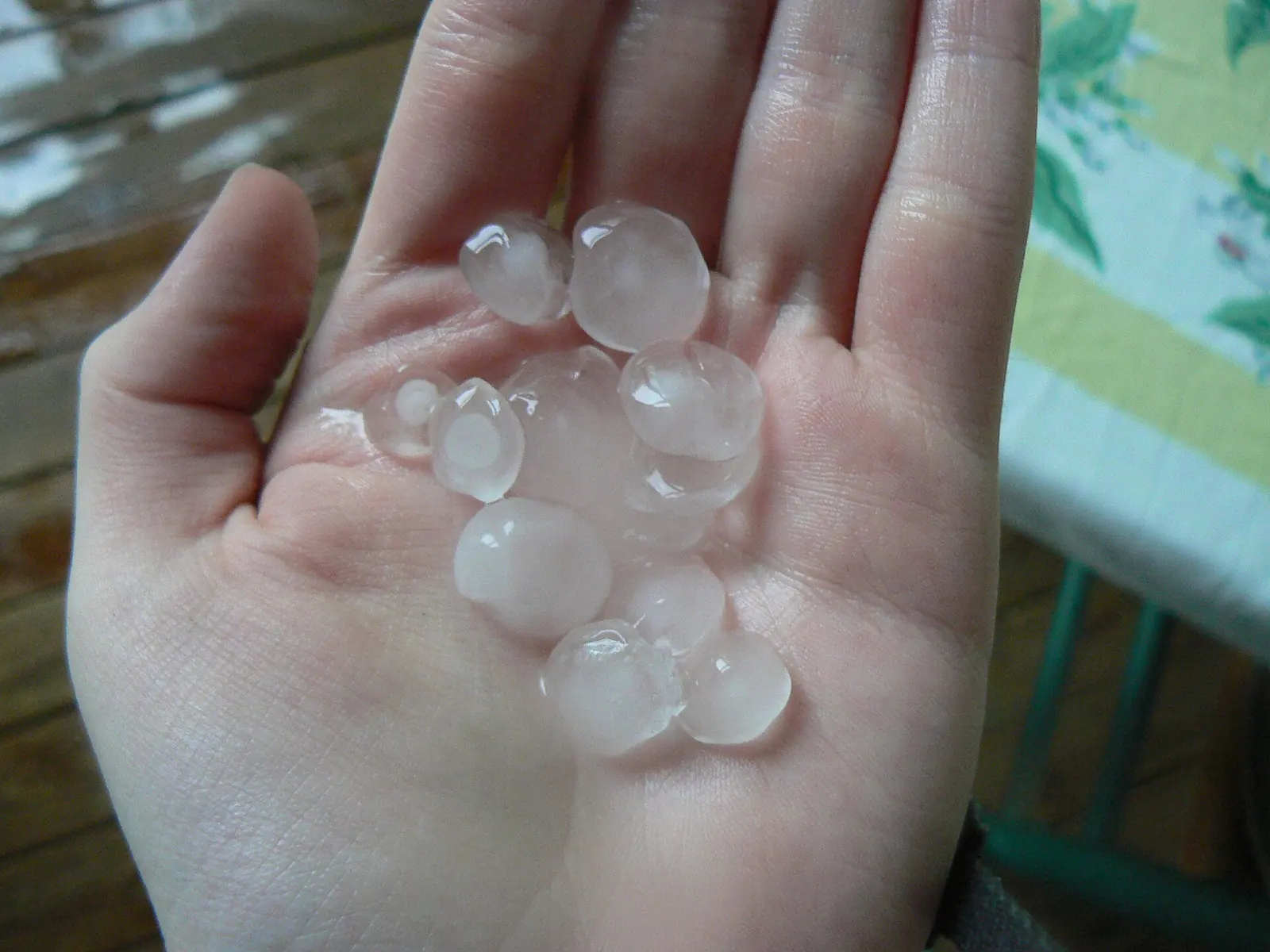
Hail as small as ¾ inch (penny size) can damage asphalt shingles, especially older or worn roofs, and wind-driven hail can do more damage than its size suggests. Even smaller hail can dent gutters, vents, and screens.
The National Weather Service considers hail 1 inch (quarter size) and larger severe.
Tip: if you can safely do so after the storm, photograph a few hailstones next to a coin or ruler and note the date.
| Compared to | Diameter |
|---|---|
| Pea | ¼ in. |
| Penny (damage can start) | ¾ in. |
| Nickel | ⅝ in. |
| Quarter (NWS severe) | 1 in. |
| Half dollar | 1¼ in. |
| Ping pong ball | 1½ in. |
| Golf ball | 1¾ in. |
| Tennis ball | 2½ in. |
| Baseball | 2¾ in. |


Small damage can turn into big problems
Hidden damage shortens roof life
Bruised or cracked shingles may look fine from the ground but wear out faster than undamaged ones.
Leaks can show up later
Water can work its way in slowly, so stains or leaks may not appear until weeks or months after the storm.
Granule loss speeds aging
Granules protect shingles from the sun. Where they're knocked off, the asphalt underneath breaks down faster.
What to do after a storm
- Stay off the roof. Wet, damaged roofs are dangerous. Stay away from downed power lines.
- Photograph from the ground. Take pictures of the roof, gutters, siding, windows, and any hail or debris in the yard.
- Note the storm date. Write down the date and time, and save any weather alerts.
- Check inside for leaks. Look at ceilings, the attic, and around windows and skylights for water stains or drips.
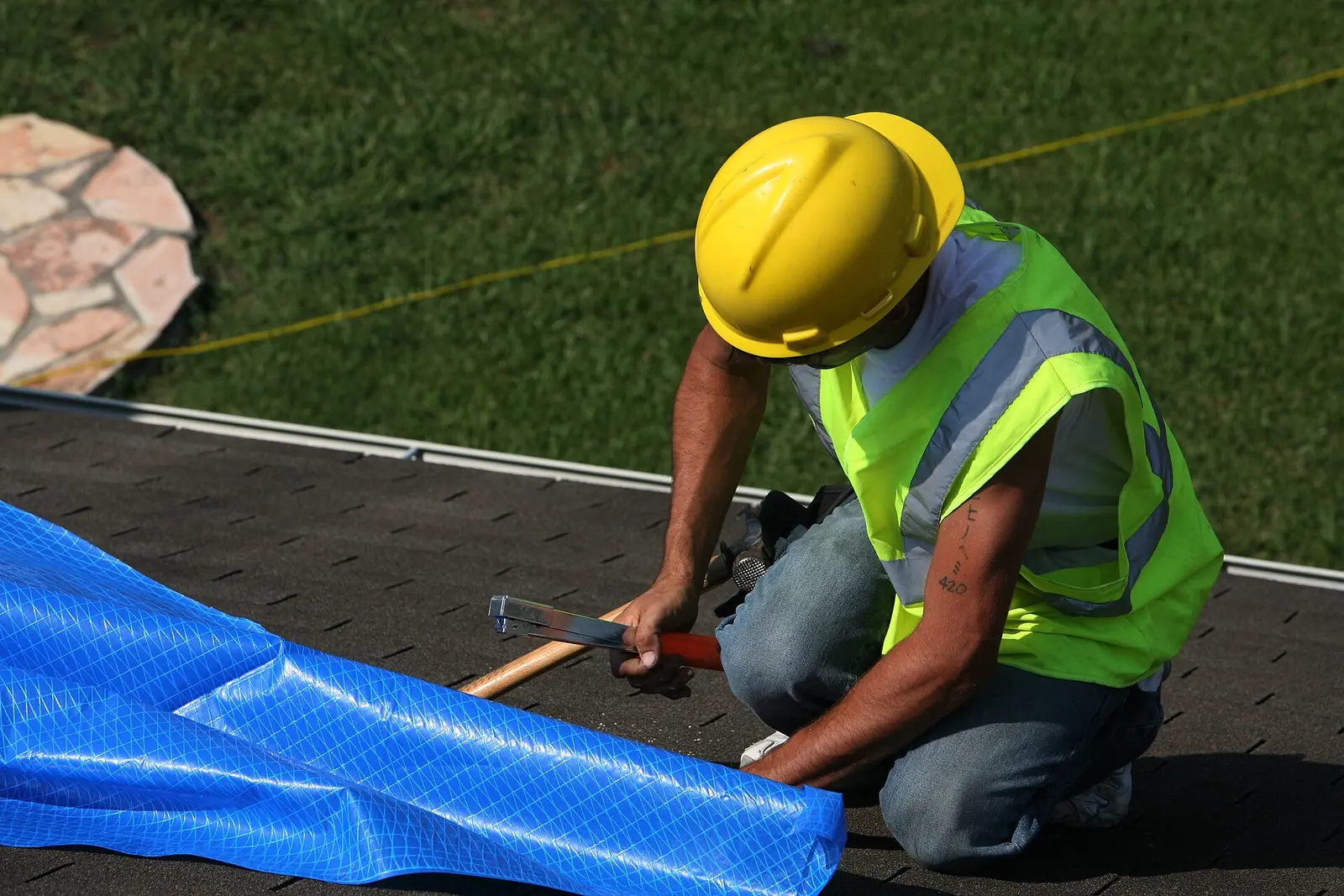
- Tarp if it's leaking. A temporary tarp can help prevent more water damage. Call us for emergency tarping.
- Schedule a free inspection. We'll inspect your roof and show you photos of what we find.
- Check your policy's deadlines. Many homeowner policies set a time limit for reporting storm damage. Check your policy or ask your insurance agent.
About insurance: If you decide to file a claim, the claim is between you and your insurance company. Hail & Gale is a roofing contractor, not a public adjuster. We don't negotiate claims on your behalf, and we don't waive, rebate, or cover deductibles. You are responsible for your deductible. If you ask, we can meet your adjuster at the property to show them the damage we documented.